
Looking to build your own SEO personal website? This guid will walk you through the lessons I learned along the way.
Building my SEO personal website felt very different from working on client projects. When you build a site for a client, there is always some distance. But when the website represents you, every decision feels more personal — from the words you choose to the way the page flows.
At first, I believed that solid SEO fundamentals would be enough. I focused on structure, keywords, and technical setup. Over time, I realized that personal websites don’t succeed just because they’re optimized — they succeed because they feel clear, intentional, and human.
These are the most important lessons I learned while building mine.
Personal branding matters more than SEO tactics
In the early stages, I approached my website like any other SEO project. I did keyword research, planned content topics, and made sure everything was technically sound. What I didn’t fully consider was how people would perceive me through the website.
Visitors weren’t judging my site based on rankings or optimization. They were trying to understand:
- how I think
- what I care about
- whether I feel trustworthy
Once I shifted my mindset from “ranking pages” to “shaping perception,” the content became more focused. Interestingly, SEO performance improved after the branding direction became clearer.
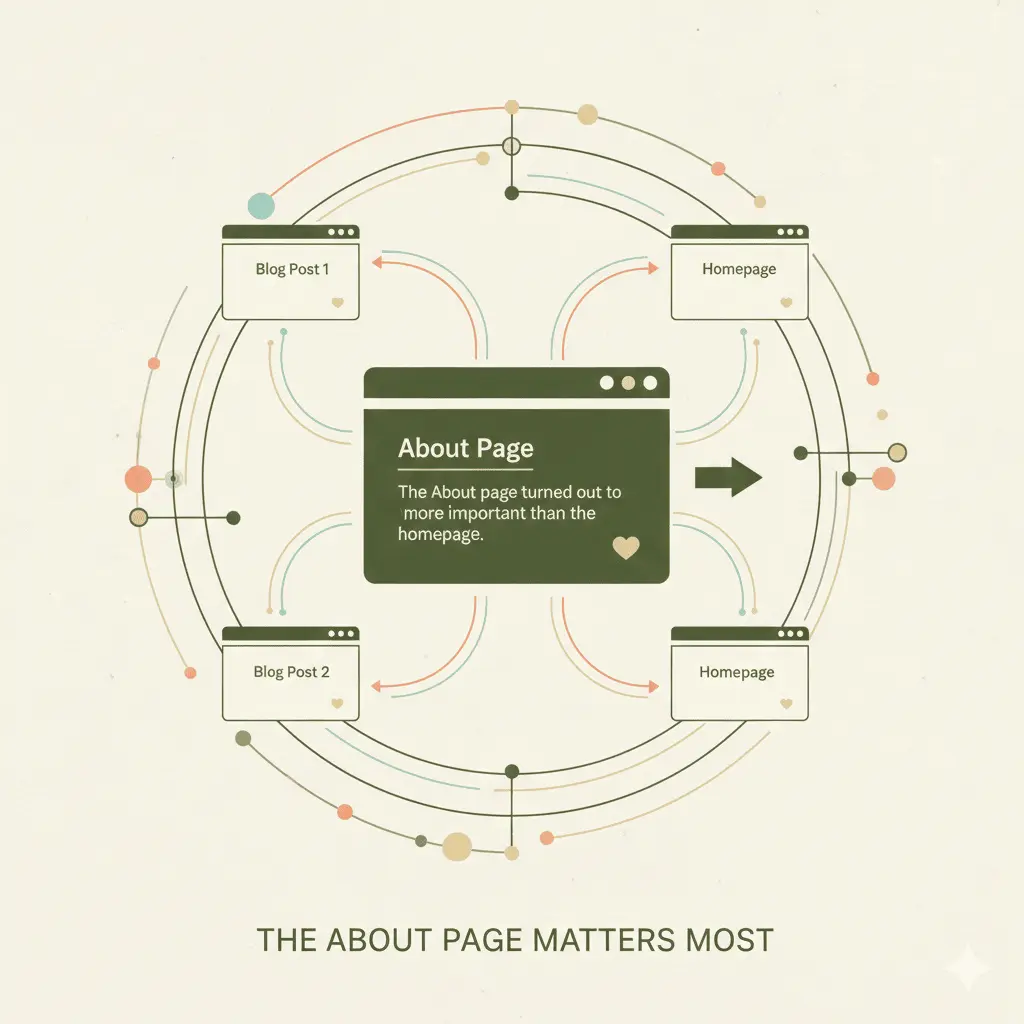
The “About page” turned out to be more important than the homepage
One unexpected insight came from analytics.
Many users didn’t spend much time on the homepage. Instead, they moved quickly from a blog post to the About page and stayed there longer.
Originally, my About page was written like a résumé. It listed skills, tools, and experiences. After rewriting it to include my journey into SEO, my interest in UX, and how I approach problems, engagement improved noticeably.
People don’t visit personal websites looking for perfection. They want context and honesty.
Writing from experience attracts the right audience
Competing with generic “how-to SEO” articles on a personal website is rarely worth it. Those topics are crowded, and they don’t help you stand out.
When I started writing from personal experience — lessons, mistakes, and observations from my own site — the results were different. Traffic numbers were smaller, but engagement was stronger. Readers stayed longer and interacted more with the content.
Experience-based writing builds trust and naturally supports EEAT, even without high search volume.
UX problems hurt personal brands faster than rankings
On a personal website, UX is not just a design concern — it’s part of your identity.
Some of my early mistakes included long text blocks, unclear hierarchy, and sections that didn’t guide the reader naturally. Even though the content itself was fine, the experience felt heavy.
After improving spacing, typography, and flow, the site felt calmer. Scroll depth improved, and the content became easier to digest. This reinforced an important lesson for me as someone interested in both SEO and UX: optimization without comfort doesn’t last.
Minimal design works only when it’s intentional
I chose a minimalist design because it aligned with personal branding and reduced distractions. But I learned quickly that “simple” doesn’t automatically mean “good.”
Minimalism only works when structure is clear. Strong typography, intentional spacing, and clear section breaks are what make a simple site feel confident rather than unfinished. This lesson changed how I think about layout decisions, especially for personal websites.
Internal linking should be planned earlier, not later
At first, I published articles without a clear internal linking strategy. Over time, I had to go back and reorganize content manually.
Personal websites benefit a lot from having a clear structure:
- a main topic or pillar
- supporting articles
- natural internal links
Planning this early saves time and helps both users and search engines understand your positioning faster.
Writing for humans builds more authority than writing for Google
When I stopped overthinking keyword usage and SEO phrasing, the content became easier to read. Writing with clarity and a natural flow helped the site feel more personal and trustworthy.
People respond to voices, not formulas.
That’s especially true on personal websites.
Growth is slow, and that’s normal
Personal websites rarely grow fast. They don’t spike overnight, and they don’t behave like niche or affiliate sites.
But they do something more valuable: they compound quietly. Over time, they build authority, create a searchable identity, and support long-term goals. Accepting this helped me focus on consistency instead of short-term results.
Final thoughts
Building my SEO personal website taught me lessons that client projects never did. It forced me to clarify my positioning, balance SEO with UX, and write more honestly.
If you’re building your own personal website as an SEO specialist, don’t aim for perfection. Focus on clarity, intention, and consistency. The rest follows naturally.
If you’re interested in personal branding, UX-driven SEO, or structuring a personal website as an SEO specialist, you can explore my other articles on website strategy and content planning.